Pro Utilitate Hominum

For the Service of Mankind

Sunday, June 29, 2014

Sports Day (27/06/2014)

SMJK Chong Hwa's Sports Day was held on the 27th of June, Friday. All the Uniform bodies are to march around the stadium at the opening and closing ceremony . So we St. John, are too asked to join the marching.

Opening


Closing


Thursday, May 1, 2014

Activity 26-04-2014

On the 26th of April, all St. John members came to attend the last activity of April. :D

Let the pictures tell you the story :)


Group 1- Learning About CPR 


Senior Group - Revision for the upcoming Re-BFA 
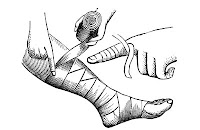
Bandaging


Bandage everywhere hahaha


Head bandage
All the best in your Re-BFA guys !

Wednesday, March 19, 2014

Bleeding

Minor cuts, scratches and grazes

1. Stop Bleeding    

  • Apply direct pressure on the cut or wound with a clean cloth or tissue until bleeding stops.
  • If blood soaks through the material, don’t remove it. Put more cloth on top of it and continue to apply pressure.
  • If the wound is on the arm or leg, raise limb above the heart to help slow bleeding.

2. Clean Cut or Wound
  • Gently clean with warm water. 
  • Don’t use hydrogen peroxide or iodine, which can damage tissue.

3. Protect the Wound

  • Apply antibiotic cream to reduce risk of infection and cover with a sterile bandage.
  • Change the bandage daily to keep the wound clean and dry.


Severe Bleeding

Image:Sanitize your hands if you can Step 1.jpg
1. Sanitize your hands if you can. If you have them, put on surgical gloves. This will help to prevent infection to the injured person.

Lay the injured person down flat and elevate the legs or the wounded area Step 2.jpg
2. Lay the injured person down flat and elevate the legs or place a pillow under the body so that the trunk is just slightly higher than the head. If the wound is in a limb, elevate the limb.

Remove any debris or dirt from the bleeding area Step 4.jpg
3. Remove any debris or dirt from the bleeding area without removing any large chunks that may have caused the damage.

Place a pad over the wound tightly Step 6.jpg
4. Wrap the wound with a bandage if you have one. If not, use a clean cloth or whatever else you have. Bind it with adhesive tape. Continue to use your hands or whatever else you may have available.

Add cloths or any other absorbent material you might have if the bleeding does not stop Step 7.jpg
5. Add cloths or any other absorbent material you might have if the bleeding does not stop and is coming through the bandage.

Place an ice pack on the wounded area Step 8.jpg
6. Place an ice pack on the wounded area. This will help to constrict blood vessels, which will help stop bleeding.

Locate the artery nearest to the wound and apply pressure to it Step 9.jpg
7. Locate the artery nearest to the wound and apply pressure to it, keeping your fingers flat and against the bone if the bleeding does not stop.

Get the injured person to the emergency room as quickly as you can Step 10.jpg
8. Get the injured person to the emergency room as quickly as you can when the bleeding has stopped or continue to wait for help to arrive.

WARNING
  • Wear gloves, if possible, to prevent infection.
  • If patient becomes unconscious, follow DRCAB
  • If embedded object in wound, apply pressure either side of wound and place pad around the object before bandaging.
  • As a last resort and only when other methods of controlling bleeding have failed, a tourniquet may be applied to a limb to control life-threatening bleeding.
  • Wednesday, February 5, 2014

    Heart Attack

    What Is A Heart Attack?

    A heart attack happens when the flow of oxygen-rich blood to a section of heart muscle suddenly becomes blocked and the heart can't get oxygen. If blood flow isn't restored quickly, the section of heart muscle begins to die.


    Symptoms of a heart attack :


    • Discomfort, pressure, heaviness, or pain in the chest, arm, or below the breastbone
    • Discomfort radiating to the back, jaw, throat, or arm
    • Fullness, indigestion, or choking feeling (may feel like heatburn)
    • Sweating, nuasea, vomiting, or dizziness
    • Extreme weakness, anxiety, or shortness of breath
    • Rapid or irregular heartbeats
    *During a heart attack, symptoms may last for 30 minutes or longer.


    First Aid

    • Have the person sit down, rest, and try to keep calm.
    • Loosen any tight clothing.
    • Ask if the person takes any chest pain medication for a known heart condition, such as nitroglycerin, and help them take it.
    • If the pain does not go away promptly with rest or within 3 minutes of taking nitroglycerin, call for emergency medical help.
    • If the person is unconsiuos and unresponsive, call 911 (or your local emergency number), then begin CPR.
    *Make sure the patient continues breathing and has a pulse until the ambulance arrives.

    DO NOTs

    • Do NOT leave the person alone except to call for help, if necessary.
    • Do NOT allow the person to deny the symptoms and convince you not to call for emergency help.
    • Do NOT wait to see if the symptoms go away.
    • Do NOT give the person anything by mouth unless a heart medication (such as nitroglycerin) has been prescribed.


    Prevention

    • If you smoke, quit. Smoking more than doubles the chance of developing heart disease .
    • Keep blood pressure, cholesterol, and diabetes in good control and follow your doctor's orders.
    • Lose weight if obese or overweight.
    • Get regular exercise to improve heart health.
    • Eat a heart-healthy diet. Limit saturated fats, red meat, and sugars. Increase your intake of chicken, fish, fresh fruits and vegetables, and whole grains. 
    • Limit the amount of alcohol you drink. One drink a day is associated with reducing the rate of heart attacks, but two or more drinks a day can damage the heart and cause other medical problems.

    Friday, December 13, 2013

    Holiday Training

    During holiday, members of 3cc went back to school for some extra training (10/12/13-12/12/2013) .

                                                                     First day

    simple Foot drill practice


    Second Day

    Short Case Trial :D

    Lock roll method to transport casualty


    Bandaging :)


                                                                           Third Day 

    After simple foot drill training (8am-12pm) , we start our short case trial.


    Activities ended at 3pm afternoon, members get to learn more about simple trauma management and also bandaging, dressing, transportation, head-to-toe examination, primary survey, secondary survey and many more!

    Although the attendance of members wasn't satisfied, but we had a lot of fun! We hope that members will be more interested in our activities in the future!


    Monday, December 2, 2013

    Shock (休克)

    What is shock?

    Shock is a condition arising from stress or injury producing an insufficient supply of blood to the brain and other vital organs.

    The Sign and symptoms/Recognition
    - Rapid pulse
    - Pale, cold and clammy skin
    - Sweating

    > As shock develops:

    - Rapid, shallow breathing
    - Weak pulse
    - Grey-blue skin, especially in inside lips
    - Nausea and vomiting
    - Thirst

    >As the brain's oxygen supply weakens:
    - Restlessness
    - Gasping for air
    - Loss of consciousness

    Management (what to do?)
    Help the casualty to lie down, raise and support his legs above the level of his heart.
    Treat any cause of shock, such as bleeding or burns.
    Keep the casualty's head low, loosen any clothing that constricts his neck, chest and waist.

    Cover the casualty with a blanket to keep him warm. Advise the casualty not to move.
    Call 999 for emergency help. Give ambulance control details about the cause of shock (if known)
    Monitor and record vital signs (level of response, breathing and pulse) until help arrives.


    Thursday, October 10, 2013

    Treating Burns and Scalds

    Burns are injuries caused by extremes of temperatures , chemicals or radiation. Burns caused by "wet" heat such as steam or hot liquids are called scalds.

    To treat a burn, follow the first aid advice below:
    • Immediately get the person away from the heat source to stop the burning.
    • Cool the burn with cool or lukewarm water for 10-30 minutes. Do not use ice, iced water or any creams or greasy substances, such as butter.
    • Remove any clothing or jewellery that is near the burnt area of skin, but do not move anything that is stuck to the skin.
    • Make sure the person keeps warm – for example by using a blanket – but take care not to rub it against the burnt area.
    • Cover the burn by placing a layer of cling film over it.
    • Use painkillers, such as paracetamol or ibuprofen, to treat any pain.


    Electrical burns

    Electrical burns may not look serious, but they can be very damaging.
    If the person has been injured by a low-voltage source (up to 220–240 volts) such as a domestic electricity supply, safely switch off the power supply or remove the person from the electrical source using a non-conductive material. This is a material that does not conduct electricity, such as a wooden stick or a wooden chair.
    Do not approach a person who is connected to a high-voltage source (1,000 volts or more).

    Chemical burns

    Chemical burns can be very damaging and require immediate medical attention.
    • remove any clothing that has the chemical on it from the person who has been burnt
    • if the chemical is dry, brush it off their skin
    • use running water to remove any traces of the chemical from the burnt area

    Sunburn

    • If you notice any signs of sunburn, such as hot, red and painful skin, move into the shade or preferably inside.
    • Take a cool bath or shower to cool down the burnt area of skin.
    • Apply after-sun lotion to the affected area to moisturise, cool and soothe it. Do not use greasy or oily products.
    • Stay hydrated by drinking plenty of water.
    If a person with heat exhaustion is taken quickly to a cool place, given water to drink and has their clothing loosened, they should start to feel better within half an hour. If they don’t, they could develop heatstroke. This is a medical emergency and you’ll need to call 999 for an ambulance.